Comparison · Cloud IoT services
“We already have Azure” is an answer to a different question.
AWS IoT SiteWise and Azure IoT Operations are serious industrial services with asset models, edge components and deep integration into their own analytics stacks. If your organisation has picked a cloud, using it is sensible. The question this page answers is what still has to exist inside the plant either way.
- What it is
- Cloud IoT services: Managed cloud industrial services, for example AWS IoT SiteWise or Azure IoT Operations
- What Proxus is
- An industrial data platform: collect, model, govern, store, deliver
- Honest summary
- Strong once data is in the cloud. The plant floor is the part they still expect you to solve.
- Your options
- Keep the cloud for analytics with Proxus feeding it from the plant, or run the plant side in Proxus alone and add the cloud when you need it. Both paths are below.
Give them their due
What Cloud IoT services is genuinely good at.
A comparison that only lists the other product's weaknesses is a sales sheet, not a decision aid. These are real strengths, and some of them are reasons not to buy Proxus.
-
Scale and analytics you will not build
Once data arrives, the storage, analytics, machine learning and BI services around it are enormous and priced by consumption. Competing with that from a plant server would be foolish.
-
Asset models and industrial features
These are not generic IoT hubs. SiteWise has asset models and metrics; Azure IoT Operations ships an edge-native MQTT broker and a Kubernetes data plane.
-
Already procured
If the enterprise agreement is signed and the security review is done, adding a service is far easier than adding a vendor. That is a real advantage and it is not a technical one.
-
One operating model for IT
The same identity, monitoring and cost tooling as the rest of the estate. Your cloud team will prefer it, and they are not wrong to.
Attribute by attribute
Where the two actually differ.
Both columns are filled in. Where Cloud IoT services is ahead, the row says so.
-
Where the platform lives
Proxus
In your network. The cloud is a delivery target, not a dependency.
In the docs: Where the platform livesCloud IoT services
In the cloud, with edge components managed from it. Azure IoT Operations runs on Arc-enabled Kubernetes.
-
Offline behaviour
Proxus
No documented offline limit, because there is no cloud control plane to lose. Air-gapped sites run indefinitely.
In the docs: Offline behaviourCloud IoT services
Edge components buffer, within limits. Microsoft documents that Azure IoT Operations can operate offline for a maximum of 72 hours (checked October 2026).
-
Getting data out of a PLC
Proxus
Native drivers for 66 protocols across 30 vendor and standard families, no additional connectivity product.
In the docs: Getting data out of a PLCCloud IoT services
Through edge gateways, OPC UA and partner connectivity software. Vendor-specific PLC protocols usually need a third-party product.
-
Local use of the data
Proxus
Collection, rules and buffering at the edge keep running without the link; history and dashboards live on the hub you host, inside your network.
In the docs: Local use of the dataCloud IoT services
Both have edge components that process data locally (SiteWise Edge on AWS, the edge data plane on Azure); dashboards and analytics are mostly realised in the cloud.
-
Kubernetes requirement
Proxus
Docker is enough. Kubernetes is supported where you already run it.
In the docs: Kubernetes requirementCloud IoT services
Azure IoT Operations requires Arc-enabled Kubernetes at the edge.
-
What the edge has to run
Proxus
One gateway process plus a messaging container, installed by one script on a plant server or industrial PC. Kubernetes is an option, not a prerequisite.
In the docs: What the edge has to runCloud IoT services
Arc-enabled Kubernetes and the service’s edge components, managed from the cloud.
-
Cost model
Proxus
Priced by gateways and data rate, fixed annually and independent of how much data you keep locally.
Pricing: Cost modelCloud IoT services
Consumption-based, which scales smoothly and can also grow in ways nobody predicted.
-
Data residency
Proxus
Data can stay entirely inside the plant network. Nothing leaves unless you configure a target.
In the docs: Data residencyCloud IoT services
Region-based, with the governance that comes from the provider.
-
Multi-cloud
Proxus
Cloud-agnostic: the same modelled signal can be delivered to more than one cloud.
In the docs: Multi-cloudCloud IoT services
Each service is native to its own cloud.
Proxus figures come from the current build's own driver and target inventory. Cloud IoT services figures come from the vendor's published material, linked at the end of this page. Nothing here is measured on a benchmark neither party has agreed to.
Choose Cloud IoT services
When we are not the answer.
- The workload really is cloud analytics, the sites are well connected, and local autonomy is not a requirement.
- Your organisation has standardised on one cloud and adding a vendor is harder than adding a service.
- The equipment already speaks OPC UA or MQTT, so plant-floor connectivity is not the hard part.
- Consumption pricing suits a use case that starts small and may not grow.
Choose Proxus
When the shape of the problem fits.
- Connectivity is the actual problem: the data is trapped in controllers that speak neither OPC UA nor MQTT.
- The plant has to keep running, keep recording and keep deciding when the link is down for longer than a few days.
- Data residency or air-gapped operation is a policy, not a preference.
- You want the same modelled data in the cloud, in the plant and in the business systems, without three collection paths.
If this column describes you:
Bring the controllers your cloud service cannot read to a demoNot either/or
How they are used together.
-
Proxus collects, the cloud analyses
This is the common arrangement. Proxus reads the equipment, models it and delivers to AWS IoT Core or Azure IoT, outbound from inside the plant, with no inbound access required.
-
The plant keeps its own copy
History and dashboards on the hub you host keep working during an internet outage. Data waits in the gateway’s buffer within its retention and is sent in order when the link returns.
-
Model once, send anywhere
The same modelled signal reaches the cloud, the historian and the MES without a separate pipeline per destination.
Sources
- AWS: IoT SiteWise ↗
- AWS: IoT SiteWise Edge ↗
- Microsoft Learn: What is Azure IoT Operations (offline limit documented here) ↗
- Proxus: Microsoft Azure integration ↗
- Proxus: AWS integration ↗
Last checked against vendor material: October 2026.
Products change. If something on this page is out of date or wrong, tell us and we will fix it, including when the correction favours Cloud IoT services.
Questions
Proxus and Cloud IoT services: short answers.
- How long can the plant run without the cloud?
- Proxus has no documented offline limit, because there is no cloud control plane to lose; air-gapped sites run indefinitely. Microsoft documents a maximum of 72 hours offline for Azure IoT Operations (checked October 2026).
- Does Proxus need Kubernetes?
- No. Docker is enough; Kubernetes is supported where you already run it. Azure IoT Operations requires Arc-enabled Kubernetes at the edge.
- Can Proxus send data to AWS and Azure?
- Yes. Proxus delivers to AWS IoT Core or Azure IoT outbound from inside the plant, with no inbound access required, and the same modelled signal can go to more than one cloud.
Proven in production
Running in production at these sites.
-

Manufacturing
Digital factory data management
MEXT Digital Factory
Read the case study -

Mining & energy
Mining, fleet and solar on one platform
Kaltun Mining
Ask us about this deployment -

Energy
Grid monitoring at the edge
CK Enerji
Ask us about this deployment -
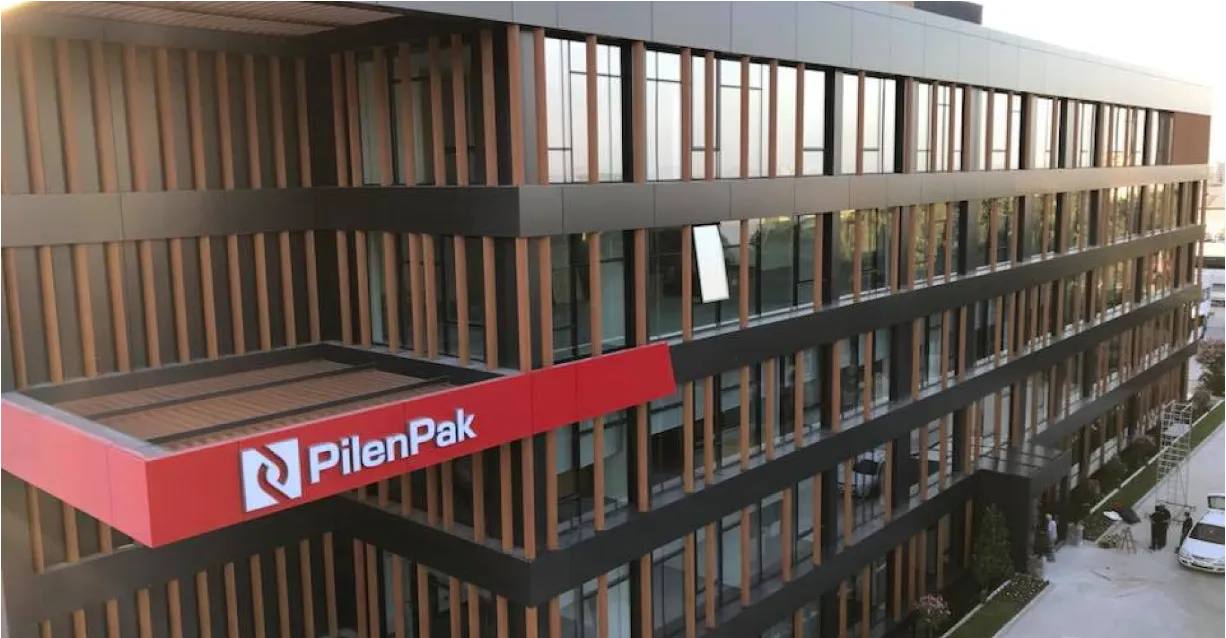
Manufacturing
Unified Namespace with Oracle ERP
Pilenpak
Ask us about this deployment
Next step
Decide what has to run inside the plant.
Tell us which cloud you use, which controllers feed it and how long a site must run without the link. In thirty minutes we map what runs on site in Proxus and what goes on to AWS or Azure.
- 01
Scoping call
Equipment, protocols, sites and the systems the data has to reach.
- 02
Technical walkthrough
A working demo against a scenario that resembles your plant, not a generic tour.
- 03
Pilot plan
A defined first line or site, with the deployment and security questions answered up front.
- 04
Roll-out
The same templates bring the next lines and sites online.